Showing posts with label Lewis Eady. Show all posts

5.7.12

Your New Piano


So you have bitten the bullet and invested in a new piano… now what?

In the next few blogs I will cover some of the do’s and don’ts of maintaining your piano correctly.  This will ensure that your piano performs to its optimum for the longest time and maintains its value.

Where should I place the piano in my room?
To some extent this is a personal and aesthetic matter, however we can look at the serious 'do not' cases. 
Good light on the keyboard is desirable, but possibly not if this is north facing and will attract the sun at its hottest.  At all costs you must avoid any part of the casework heating up due to exposure from the sun.  In time this will destroy your tuning stability, possibly cause damage to the timbers and almost certainly cause bleaching of the veneers if your piano is a wood finish.
Try to reach a balance of light, position and appeal.  Having a grand positioned so that the lid opens directly into a wall is not ideal, if nothing else you will find it difficult to lift the lid. If there is no option but to have it in a window where the sun will fall on it at certain times of the day, it is clear that you must be prepared to pull the curtains or blinds over when this happens.  Fine if you remember, but disaster if you don't and then go away for a week in the summer! 
Pianos should be positioned away from external walls if they are un insulated and as far away from the kitchen as possible in order to avoid greasy fat deposits on the surface.
Heat sources are a problem. As a general rule keep the piano as far away from any heat source as possible.
Non flued gas fires pump moisture into the environment which will cause humidity related problems to the piano such as compression of the soundboard. Wood fires on the other hand will dry out the piano quicker than you can say – OMG my sound board has cracked.
Many modern homes also incorporate under floor heating which will not only destabilize the tuning but dry out the soundboard.
Many of these issues can be mitigated by the installation of controlled damp-chasers and heat mats however it is imperative that each piano environment is assessed individually. If in doubt, ASK!

Finally invest in a $70. Dick Smith Hygrometer which will track the relative humidity and temperature  of your room and will let you know if you have a problem.


Thanks to Jeff Shackell of Shackell Pianos UK for his info.

Next week we will look at tuning, regulation and voicing.

Post by John Eady


Lewis Eady blogs about pianos in general and in particular Steinway pianos are our passion.  New Zealand Pianos specialist Lewis Eady have been passionate about pianos since 1884.

19.6.12

'Cool' Guitar Vids


Every now and then we come across some cool bits of promotional videos which transcend that annoying selling to you bit, and are just plain cool. Here are a couple of those videos.

Alhambra guitars are a range of Spanish made classical and steel string guitars brought in exclusively by Lewis Eady Ltd. http://vimeo.com/38564130

Fender guitars need no introduction. A few years ago when we looked at adding an electric brand to our retail shop there really was only one choice. http://www.youtube.com/watch?v=1MnylRaQC3w


Come into the Lewis Eady guitar showroom to check out these quality guitars ‘in the wood’.

Post by David Love


13.6.12

Second hand pianos - the good the bad and the ugly


If I had $1 for every time I heard the phrase “Old piano for sale - just needs a tune”, I would be able to retire by now.
If somebody said to you “50 year old car for sale - works fine just needs a service”, you would probably be slightly more skeptical!
However there are more moving parts subject to wear and tear in a piano action than in a car.

As I have mentioned before, pianos - like us and cars - have a life time and that life time is dependent primarily on three things:
  1. The quality of the piano in the first instance
  2. How well it has been maintained 
  3. How much use the piano has had

If considering a second hand piano, there is quite a bit to take into consideration, and remember, if you buy privately you don’t get a warranty and you are not covered by the consumer guarantees act. So be cautious and do your homework.

Here are some basic rules that should be observed:
  1. Check the brand and serial number of the piano and give us a call at Lewis Eady Ltd to determine the age.
  2. Never buy a piano over 70 years of age, no matter how nice it might look. There are some obvious exceptions such as Steinway.
  3. Spend $80 on getting a qualified technician (not your husband’s second cousin who once played the piano) to do a report on the piano. This could save you thousands of dollars.
  4. Remember that Trademe is a wonderful place to pick up bargains as well as other people’s junk.
  5. Be very wary of Japanese made pianos over 30 years old and in particular of used Japanese imports. These should only be purchased from reputable companies that carry out the service work and offer a comprehensive warranty.
  6. Factory warranties are NOT transferable and only apply to the initial purchaser.
  7. Do your research on the Internet to find out if the piano you are looking at is good quality. Quite often they were bad when they were made.

I have never bought or traded a second hand piano that didn’t require some sort of service work and on the odd occasion that I have purchased ‘sight un seen’ without getting our technicians to check it out - I have been burned.
Then guess what - we sell them on Trademe with no warranty!

If in doubt, please call us at Lewis Eady Ltd. Yes, we sell pianos however we are also more than happy to offer any advice you need and can at the very least suggest a good technician to view the piano or movers to shift it.

Lewis Eady blogs about pianos in general and in particular Steinway pianos are our passion.  New Zealand Pianos specialist Lewis Eady have been passionate about pianos since 1884.

7.6.12

So you have decided to buy a ‘REAL’ piano for your family?


Where to from here?
Essentially you have two choices – New or Second hand. If only it was that simple!

A decade ago it was relatively simple...

Imagine if you will a 'Pyramid'...
At the very top - of course - you had Steinway underneath which was the remainder of the European brands such as Bechctein, Schimmel, Grotrian, Sauter etc.
Underneath these you moved down the pyramid to the Japanese made pianos such as Kawai and Yamaha and finally at the very bottom were what we referred to as PSOs (or Piano Shaped Objects - not to be confused with real pianos).
Of course, this structure is entirely relative to the value, cost and performance of these instruments and the old adage ‘you get what you pay for’ is very relevant in the world of pianos.

Ten years on and whilst the number of piano manufacturers has almost doubled, the quality structure remains very similar.
A Chinese client of mine explained it quite succinctly to me. He said, that a Japanese manufacturer will look at a Steinway piano and say, “I am going to try and build a piano as good as that.”
Where as a Chinese manufacturer will look at the same piano and say, “I am going to build something that looks like that.”

The emerging ‘new world’ manufacturers as yet, simply don’t have the experience or the skilled technical and design workforce to build quality pianos. This is changing rapidly and no doubt in a decade’s time the situation will be quite different. In the mean time we are their guinea pigs.

The other common misnomer put out by many ‘new world’ manufacturers is that they source their parts from well known overseas companies and simply ‘assemble’ them in their factory.
A piano is NOT like a car - 'quality is not determined by single properties, but by their interaction' and therefore a piano is a reflection of the standard of its designer.

New will always be best, however for many this is a financial impossibility. Next week we will look at 2nd hand pianos and what the pitfalls are.

Lewis Eady blogs about pianos in general and in particular Steinway pianos are our passion.  New Zealand Pianos specialist Lewis Eady have been passionate about pianos since 1884.

28.5.12

Which piano is best suited for my children?

...this is a question which we get asked often at Lewis Eady Ltd.


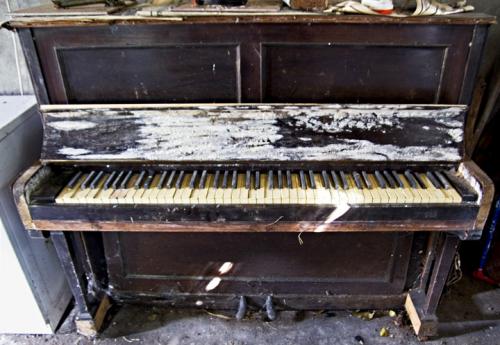
Whilst Grandma Dawn’s 100 year old upright piano might make an attractive proposition both cosmetically and financially, it may not necessarily be the best option to learn on.
Firstly one needs to understand that pianos - like humans - have a lifetime. The average upright piano action is made up of over 8000 moving parts which are subject to wear and tear. Furthermore the tension created by the strings of a piano can be in excess of 15 tonnes per square inch which over time fatigues the soundboard causing it to loose tone and power.
In a nutshell after 100 years most pianos are dead and gone, and should be given a suitable burial (there are of course always exceptions to this).

So what options are there?

Keyboards are a cheap option starting at around $400 but have a lightweight touch derived from Organs and are really only suitable for the very early stages of learning. Furthermore they tend to have truncated keyboards of either 61 or 76 notes as opposed to a piano which has 88. If you must go down this route choose one which is ‘touch sensitive’ and make sure that you have a plan to upgrade to something better within a year.

Digital Pianos are more expensive but a more preferable option to keyboards. These have a full 88 note keyboard and a weighted action which - in the best brands - will closely resemble that of a piano. Be aware though, these to will have a lifetime. If your little Johnny has aspirations of becoming the next Ashkenazy, even the best digital pianos will only see him through to around grade 4 level (Associated Board of the Royal Schools of Music).

Acoustic Pianos obviously the best choice but these can be a real mine field as there are so many options.

In my next blog I will go into more detail on these in particular and will look at the options with new versus 2nd hand, and the difference in qualities available.

Lewis Eady blogs about pianos in general and in particular Steinway pianos are our passion.  New Zealand Pianos specialist Lewis Eady have been passionate about pianos since 1884.

22.9.11

Music for Minors


I have had a unique opportunity to explore elements of the Orff approach to music teaching, through teaching the Singing Rainbows pre-school program and Musical Jam for Year One and Two, both of which are influenced heavily by this philosophy. It is a new approach to teaching music for me. I always believed that if I had a child I would thrust an instrument in its hand as soon as humanly possible. But, when I did have my own child, I realised that greater benefit would be gained by having music as a constant in his life – we made sure there were lots of instruments around the house, the opportunity to experiment with sound and to listen to and play a variety of music. He, of course, lapped it up and seemed to have a really good ear. However, by about 4 he seemed to have lost all sense of rhythm... and pitch. Obviously, I was horrified. Then he became part of my Musical Jam class and my great experiment. It is a fantastic opportunity to watch his development, knowing everything I do about his past. 


I also teach the violin, in a formal more traditional way. Some of my students have had previous musical exposure and some have not. For the most part, the ones who have been banging on pots and drums driving their parent nuts, or the ones who are involved in church or cultural groups, or ones who have been involved in programs like Musical Jam, seem to be much further down the road from noise to music.
My sons proficiency has increased enormously since participating and collaborating in music making, so has his confidence and co-ordination. But the most notable thing is his new connection to the beat. He got his rhythm back! The other great benefit, the “group” aspect, means the kids start sharing their ideas and start to articulate themselves, musically. I know that when my boy starts more formal musical training, he has a great number of musical concepts already “instinctual” – or seeming so. This will leave him able to concentrate on the more “technical” aspects of music making and understanding, enabling him to progress much faster than he would have without these basic musical elements already in place.

Post by Meryl Main
Lewis Eady Music School Tutor

15.9.11

Q. Is a larger upright better than a smaller grand?


A. There has always been much debate amongst pianists and technicians over this but at the end of the day, with very few exceptions, Grand Pianos will always win out over upright pianos - even ones which may technically be larger and better.


This is primarily down to two incontrovertible facts:

1. The action on an upright piano is what we refer to as a single escapement action, whereas a grand piano utilises a double escapement action. Coupled with the fact that the grand piano action is working with gravity, whereas the upright action is not... means the grand action will be faster, smoother and more responsive than most upright pianos.

2. The grand piano soundboard is horizontal with clear space above and below to allow for optimum sound transmission. Compare this with the upright which is generally shoved up against a wall with the lid down. Once again the grand will appear to give more sound.

As always there are exceptions. A few years ago we put on a 'duelling piano' promotion using our model A 6' 2" Steinway grand piano and our model K 132cm Steinway upright piano. I made the mistake of taking off the front of the upright in an attempt to balance up what should have been a no contest... to my horror the upright drowned out the grand!

Post by John Eady


Visit the Lewis Eady showroom and experience the best in pianos and customer service.

10.9.11

Buy responsibly... guitars that is

On Tuesday this week this article came to my attention, http://www.tennessean.com/article/20110904/BUSINESS/309030089/Gibson-goes-offensive.
At the time it made me concerned for the US guitar making industry. That’s Martin, Fender, PRS, Guild, Larrivee, Collings, the list goes… If Gibson, an industry leader has been taken down by the Federal government what’s stopping one of the others been taken down?

And that’s the question. I can’t comment on the legality of Gibson’s practice but I turned to Andrew at Lyn Mac (the importers of Martin guitars for NZ) because what they don’t know about importing US made guitars isn’t worth knowing.

Apparently it all comes back to a 100 year old piece of legislation called the Lacey Act. In a nutshell, an Act to stop illegal transportation of endangered animals, plants and wood products. What this means today is practically every guitar that comes out of a US factory needs to have paperwork showing where every piece of wood came from, who and where that wood was processed by etc.

Martin don’t cut corners, and I would assume the same could be said about the other brands listed above. Two quick examples of this:
  • Around a year ago we ordered in a very special Martin for a customer. It had a rare veneer on the headstock, and rare material for the nut and saddle. It took 3 months longer than expected and cost around 3 times more than usual to bring out that single guitar while all the paper work was checked.
  • Guitar manufacturers found a source of Rosewood in Madagascar that came close to the Holy Grail, Brazilian Rosewood. Martin created an artist model with Rosanne Cash (Johnny’s daughter) that used Madagascan Rosewood. This was going to be limited to 100 guitars only. Part way through production of this model a coup broke out in Madagascar and wood supply was sold illegally and irresponsibility to fund the fighting. Martin stopped production of all models that used Madagascan Rosewood straight away. Only 44 Rosanne Cash models were made.
Just some food for thought, but as with everything these days… Buy responsibly.

17.8.11

Is your child learning on a suitable instrument?

To give your child the best chance of success in learning the piano, it is important that they learn on a suitable instrument. In essence there are three options:
1. Keyboard
2. Digital Piano
3. Piano


Keyboards
These are the least favoured option as they have light weight sprung actions derived from organs and do not resemble piano touch at all. At the very best 6 months is the maximum a child should learn on one of these and never never never buy a keyboard that isn’t touch sensitive – they are a complete waste of time and money!

Also bear in mind that keyboards are like computers and will depreciate in value very quickly.

These are a much better option than keyboards as a learning tool. They have a full 88 note keyboard with weighted actions which in some cases - like the Kawai digital pianos - can be very close to a piano touch. 

Bear in mind though that these too have their limitations. The best quality ones like the Kawai are rated by the Associated Board up to grade four level. Most digital pianos won’t take you that far but are still way better than keyboards.

The best option but ‘Buyer beware’! Buying a second hand piano is like buying a second hand car of the same age. There are almost 8000 moving parts in a piano action. If the piano you are looking at on Trademe hasn’t been well maintained or has been exposed to high humidity or excessive use, you could be buying very expensive firewood.

All our second hand pianos are selected and serviced by qualified piano technicians and we stand behind each and every one of them with a comprehensive warranty. 

One last point on second hand pianos. Pianos are like humans – they get old and die!
They don’t get better with age.
They don’t appreciate with age.
And in many regards you would be far better off with a digital piano.

Get good advice, do your research and then come and see us at Lewis Eady for the best deal.
Finance available on request.

Poste by John Eady (Lewis Eady Ltd)

10.8.11

The Life of a Lewis Eady Music Tutor

Ah, the opportunities for a Lewis Eady Music Tutor don't cease over the holidays... I was given the chance to tutor at the Auckland Philharmonia Orchestra's 'Sistema Aotearoa' holiday programme at Sir Edmund Hillary College in Otara. The inspiration for the programme was 'El Sistema', founded in Venezuela by Jose Antonio Abreu. 90 percent of the 250,000 children attending El Sistema's music schools are from poor socio-economic backgrounds. 
Five and Six year olds came to learn Violin, Cello and Double Bass and worked towards a group string and vocal performance at the end of the week for friends and family. 

In week two I ran 2011's second installment of 'Lewis Eady Rock School' where seventeen creative young people learned the ins and outs of performing in bands and writing their own Rock songs. They worked tirelessly for 3 days finally putting on a show where they shook the foundations of M.A.I.N.Z. in stunning unrelenting ROCK style.

One member of the Rock School programme was new to our country and didn't speak english. His constant grin behind the drumkit and the Sistema Aotearoa experience reminded me of the power of the language of music and what can happen when people of varying social and creative backgrounds are brought together to share it.


Post by Brent McGarva 

Brent joined Lewis Eady in 2005, he teaches piano, keyboard, guitar, bass guitar, ukulele and Rock Band at the Lewis Eady Music School and Lewis Eady Rock School in the school holidays.
Brent holds a Bachelor of Music from the University of Auckland, Grade 8 Piano and is currently studying to become a classroom teacher. He writes and performs both classical and rock music and is the Principal Coach of the Lewis Eady Rock School.

3.8.11

Solid vs. Laminate

There is a widely held belief that if an acoustic guitar has all solid wood it will sound better than a guitar that is laminate. In every belief there’s a small lie (see what I did there). While it’s true that the best sounding guitars are all solid, it’s not true that because a guitar is all solid wood it will sound great. Now to try and explain that particular riddle...

First off, what do I mean by all solid wood?
It’s easiest to look at the top of the guitar. If you look inside the sound hole of the guitar at the cross grain you will either be able to see grain running through the thickness of the guitar, or you’ll see three pieces of wood glued together (a wood sandwich). The wood sandwich is three pieces of wood laminated together. The top piece is usually more cosmetically beautiful than the other pieces. Laminate tops are strong, but because of the glue holding the wood together they’re also very rigid.

This shouldn’t be confused with a guitar having two pieces across the face of the guitar. There should always be two pieces (preferably book matched which is a whole other blog).


The cheapest guitars are usually laminated all over. Mid priced guitars and most entry level high end guitars (Martins, Matons etc.) have solid wood tops but laminate or composite back and sides. High priced guitars are all solid wood. In a nutshell to get a piece of wood not only thick enough to make a guitar but structurally sound, and cosmetically beautiful it costs more.  So surely if a guitar is all solid wood it will sound better. Less glue making the more free to move than if it was laminate means more resonance and tone right? Yes, but not exactly.

I often tell the story of
Antonio de Torres. Antonio de Torres is widely considered to have created the modern classical guitar. He innovated the making of guitars in Spain from 1852-1893. His belief was that the most important part of the guitar was the top. If the top was well made from solid wood the guitar would sound great. To prove this point in 1862 he made a guitar with solid spruce top and papier mache back and sides. The guitar sounded amazing; much better than the all solid wood guitars made by his contemporaries. 

This quote by Antonio de Torres explains the point of this blog
"my secret is one you have witnessed many times, and one that I can't leave to posterity, because it must with my body go to the grave, for it consists of the tactile senses in my finger pads, in my thumb and index finger that tell the intelligent builder if the top is or is not well made, and how it should be treated to obtain the best tone from the instrument."

The most important contributor to how good a guitar sounds is not what it’s made from, but the skill of the person/people who made the guitar. The question we often get asked is, is a Martin guitar really that much better than a cheaper guitar, or do you just pay for the name? 
Yes, if you play a quality guitar of any brand it does sound better than a badly made guitar (of any brand!). And yes you pay for the name… but not just the name. You pay for the 175+ years of collective guitar making skill and innovation passed down and nurtured for 7 generations of guitar makers that the name stands for. Does a D-28 sound better than a DX1, yes of course it does… that’s when we can start talking about what neck joints, bracing, oh and what solid wood does to the sound of a guitar.


Does a Farida D-8 for $299 sound and play better than solid top guitars for $299? Does a Recording King RD-16 for $599 sound and play better than an all solid wood guitar for $599?

Yes I believe so, but don’t take my word for it. Come into the shop and find out for yourself.

From David Love (Lewis Eady's GM)

27.7.11

Emerging Artists

Sydney Theme and Variations emerging artist winner…
Camelia Wong presented two concerts as part of her prize package from 2010.
Tuesday was a spellbinding performance in the glorious surrounds of Mollies Boutique Hotel in Herne Bay.


For those of you who love to mix your fine wines, dining and music experiences, this is the perfect setting. The new owners of Mollies have stamped their mark on this iconic hotel in fashionable style.


Wednesday night saw Camelia perform as part of the Lewis Eady Charitable Trust ‘Emerging Artist Series’ at the Lewis Eady showroom. She presented some very interesting repertoire including not one but two Tippet sonatas which has become somewhat of a speciality of Camelias’

August is a busy month for the Trust with two of Qu Yong’s students – Lawrence Wong and Jane Koo performing on Thursday the 4th as a warm up to the Lev Vlassenko competition, Andrew Faleatua plays an evening of Jazz on Wednesday the 17th and the annual Auckland Junior Music Contest for Primary and Intermediate school children takes place on Saturday the 27th of August.

If you would like to receive email updates to these and other events please join our concert club.

20.7.11

High NZ Dollar - Sweet Music to Piano lovers

New Zealand Dollar Hits All time High Against Euro!!

An interesting way to start a piano blog perhaps and many would question the relevancy of the financial markets to music?

However to anyone considering the purchase of any high priced or luxury item at present it is all good news.

Almost exactly four years ago when the world financial markets went into global meltdown, it was the New Zealand dollar that led the charge.

In July 2007 the New Zealand dollar bought .57 euros. In other words we paid $1.75 for every euro.

Six months later and the exchange rate was .38 a massive 33% drop in the NZ dollar. So how does this affect the price of pianos? Lets have a look at the value of a model D-274 Steinway concert grand piano.

In July 2007 with an exchange rate of Euro .57 the List price of a D-274 Concert grand piano was $258,700 inclusive of gst. 

Track forward a mere six months to an exchange rate of .38 and the price is $386,500.

The fact that the exchange rate dropped by 33% means a 50% increase in imported goods!!

Well that was the bad news; now - courtesy of a very poor political and economic climate in Greece, Portugal and Ireland - the tables have been turned and the New Zealand dollar is reaching new highs against the Euro.

So now what is the list price of a model D Steinway Concert grand piano? Well, at an exchange rate of almost Euro .6 it is $264,200 which is pretty good considering we have had an increase in gst and four factory price increases.


So the moral of this story if you haven’t already guessed, is buy your new piano now! Like today!! And save a huge amount of money.
And just to make things even easier, Lewis Eady will be holding a special, appointment only, VIP SALE on Friday the 29th and Saturday the 30th of July. This will not be advertised and there will be no ticket prices on the pianos. Just good old fashioned negotiation to give you the very best price and value that we can.

Call John on 021 524409 or David on 09 5244119 to make an appointment.

13.7.11

Life & Learning

I see evidence every day that playing music fosters and encourages valuable tools for life and learning - self-expression, leadership, communication, creativity, self-esteem and confidence.  Bands and orchestras can only be successful if there is focus and dedication from each and every member of the team.

So it was encouraging last week to read the results of the 18 month US study ‘Reinvesting in Arts Education’.  
Art, music, drama and other creative activities deserve an "unambiguous place in the curriculum" American researchers said, “Creative subjects lead to significant and lasting benefits for pupil achievement and should be put at the heart of education reforms”.
In addition to gains in student achievement, the report also identified increased motivation and engagement, and improved problem-solving, critical and creative thinking skills as key benefits of arts education.

Decades of research show strong and consistent links between high-quality arts education and a wide range of impressive educational outcomes.  
The key findings of the research were:
- Arts education helps increase academic achievement, school engagement and creative thinking.
- Integrating the arts into the teaching of other subjects can dramatically improve results and close the 'achievement gap'.
- Schools that are 'arts-rich' uniquely reach out to disengaged learners.
- Creativity is best developed through arts education.
- Research about the value of arts education is positive and consistent.

Most of us are lucky - our schools recognise the importance of music and the arts but there are also many who don’t or don’t have the resources to deliver what our children deserve.  If your school doesn’t offer strong music education, take responsibility yourself to ensure your child gets access to quality music instruction elsewhere.  It is a powerful gift which will have spin-off in many areas of their life and learning.

Miranda Rocca |  Manager - Lewis Eady Music School


6.7.11

Martin Enthusiast Behold

Greetings enthusiast, I’m pleased to bring forth good tidings in the form of new additions to our 'Top Shelf' room. In between torrential Auckland downpours it seems that the heavens have opened for a fleeting moment of magic and delivered neither three, nor four… but five new Martin acoustic guitars, making Lewis Eady Music your one stop tone shop in New Zealand for premium quality acoustic guitars. Come and enjoy the balmy 21 degree warmth of our 'Top Shelf' room, relax on the couch and strum yourself to a brighter place. In the interim, here is a brief on each of new arrivals.


OMJM

John Mayer. Ladies love him, men want to be him, and Martin made a guitar for him. And we have it! The OMJM John Mayer Special Edition is a beautiful instrument that is as lovely to look at as it is to play. The 000 body size sat comfortably in my lap and the 1 11/16” neck width felt more like a Stratocaster than Martin acoustic near the nut. Matched with a low profile Select Hardwood neck and Ebony fingerboard it makes for very smooth, fast and responsive action all the way up the neck. Martin have pulled out all the stops here, Solid Engelmann Spruce top, Solid East Indian Rosewood back and sides. All of these contributing to the OMJM producing some of the most even sounding tones I’ve heard in a while. The lows aren’t overbearing, mids are punchy and highs are crisp and clear. The Paua rosette, Gotoh open back butterbean tuners, grained binding and signed twentieth fret give this guitar a vintage vibe with a personal touch. 

M-38

Sporting a 0000 body size the M38 is renowned for producing Dreadnought like volume with a little less bass. The shallow body width (16 inches) makes for quicker decay and more tonal balance overall, not to mention a very comfy feel. The top is Solid Sitka Spruce and has been treated with a very nice vintage toner, giving it that aged look that will only get better as the years go by. The back and sides are high quality East Indian Rosewood and show a very impressive grain that when framed with the white Bolteron binding, looks quite smashing indeed. To play the M38 has a very forgiving feel in that each strum seemed to seep into the next and voicing chords became very flowing and effortless. Individual notes sustain delightfully to create lush overtones giving the M38 a voice all of its own.


D-18

The name Dreadnought was originally given to the guitar in reference to its large shape, likened to the predominant battleship design of time that boasted the same name. Where this model differs from other Martin Dreadnoughts is in its Mahogany back and sides as apposed to Rosewood which both the D-28 and D-35 both feature. A weightier piece of work, this is largely due to the fact that it doesn’t have scalloped bracing. This could be good for the heavier handed folks out there, as I found that laying into the D-18 produced some excellent sound. It’s fairly stock standard in its look, matching black body binding and scratch guard and simple dot inlays. The Rosewood neck has a nice earthy feel to it.  


OMCPA4

Part of the Performing Artist Series, designed to incorporate the traditional Martin feel with the convenience of a modern acoustic-electric the OMCPA4 comes ready to roll with a Fishman F1 Analog pick up and built in tuner. Its cutaway design means that even when reaching for those top frets the player still has oodles of space to work with. This is an all solid wood guitar (neck included) which also comes with a case and the price is lower than you think… I found it to be very forgiving in its playability and responsive to a number of different techniques. Whether strumming through some cowboy chords, bending single notes or picking folk styles the OMCPA4 delivered each time.


DC-1EL

Now I did my best Anika Moa impersonation to try and get a handle on this guitar. Because it’s left handed and I couldn’t really play it that well, but hey, I gave it a go. It’s an all solid Sitka Spruce top with solid Sapele back and sides. The pick up is a Fishman Presys which incorporates a tuner as well, so it will appeal to those that are gigging and not wanting to carry extra gear (i.e. stage tuner). Features a plain black body binding, and scratch plate.


Post by Edward Castelow (Lewis Eady)


16.6.11

Emerging Artists Big & Small


Christchurch aftershocks and cancelled flights due to Chilean ash clouds didn't stop 16 year old pianist Stephen Watson from performing in Wednesday night’s Emerging Artist Series concert to a packed house at the Lewis Eady showroom.

Stephen provided an impeccably prepared programme of Beethoven, Chopin, Janacek and Schumann demonstrating his significant technical abilities and a musicality that belied his years.

Stephen’s parents made a last minute decision to drive the route to Auckland instead of gambling on the airlines - a decision which proved to be prudent given the circumstances.

The audience were also treated to a ‘musical aperitif’ in the form of 3 ½ year old pianist 'Harry Qin' who entertained a spell bound crowd with a half a dozen well chosen musical lollipops.

We will be keeping a close eye on both Stephen and Harry and watching their careers develop.


20.4.11

New guitar arrivals - instore now!

Just landed at Lewis Eady, new guitar treats to take away the on coming winter blues!


Farida Guitars are a rapidly emerging global brand which the British public has been lapping up, making it one of the UK’s fastest growing brands. I’m very impressed by the quality of the build on all of these guitars. They are rivalling the bigger names in the price bracket for sound and overall feel and Lewis Eady is the only place you will find them in NZ, so come in and try for your self.

Farida FST-6
Classic Strat-like shape and pick up configuration with a five way switch, which offers an array of sounds for those that are just getting started and want to find their tone. The neck plays really smoothly and even after throwing down a few dive bombs with the tremolo it still stayed in tune. Did someone say Hendrix?

Farida FE-3
This has a slightly smaller more contoured body than the FST-6, making it lighter and more playable for younger players. The neck feels slightly smaller too. Great entry level model packed with punch and tone and available in the very retro Fiesta Red finish!


The Loar LH-200 FE3 SN
Voted guitar of the year by www.acousticguitarforum.com and I have to say it lives up to its hype. The smaller body size which is modelled on the guitars of the 1930’s really puts out a good racket whether you are using the Fishman Sonitone EQ pick up or not. Featuring a solid Spruce top, Mahogany back and sides, vintage butter bean peg heads, dot inlays and a beautiful abalone (Paua to us Kiwis) headstock inlay design you will gasp at the price tag.


Recording King RD-06-12
Since I picked this one up I haven’t been able to stop playing ‘Turn Turn Turn’ by The Byrds, it sounds soooo good. Boasting a solid Sitka Spruce Top and Mahogany back and sides the full Dreadnaught sound comes barrelling forth in 3D. It’s easy on the eye with its tortoise shell binding as well. Again, not half bad for something that would usually fetch a four figure price.


Francisco Domingo FG-27
If this classical guitar was your hand in poker you would have a full house. It’s all there, Solid Cedar top, Indian Rosewood back and sides, Mahogany neck, Ebony finger board and bridge, classic Spanish style heel and fetching Pearl tuning pegs. When I tried out my basic skills I found the bass tones to be prominent, rich and textual. 

Blog post by Edward Castelow


Visit our showroom and experience the very best in guitars.